
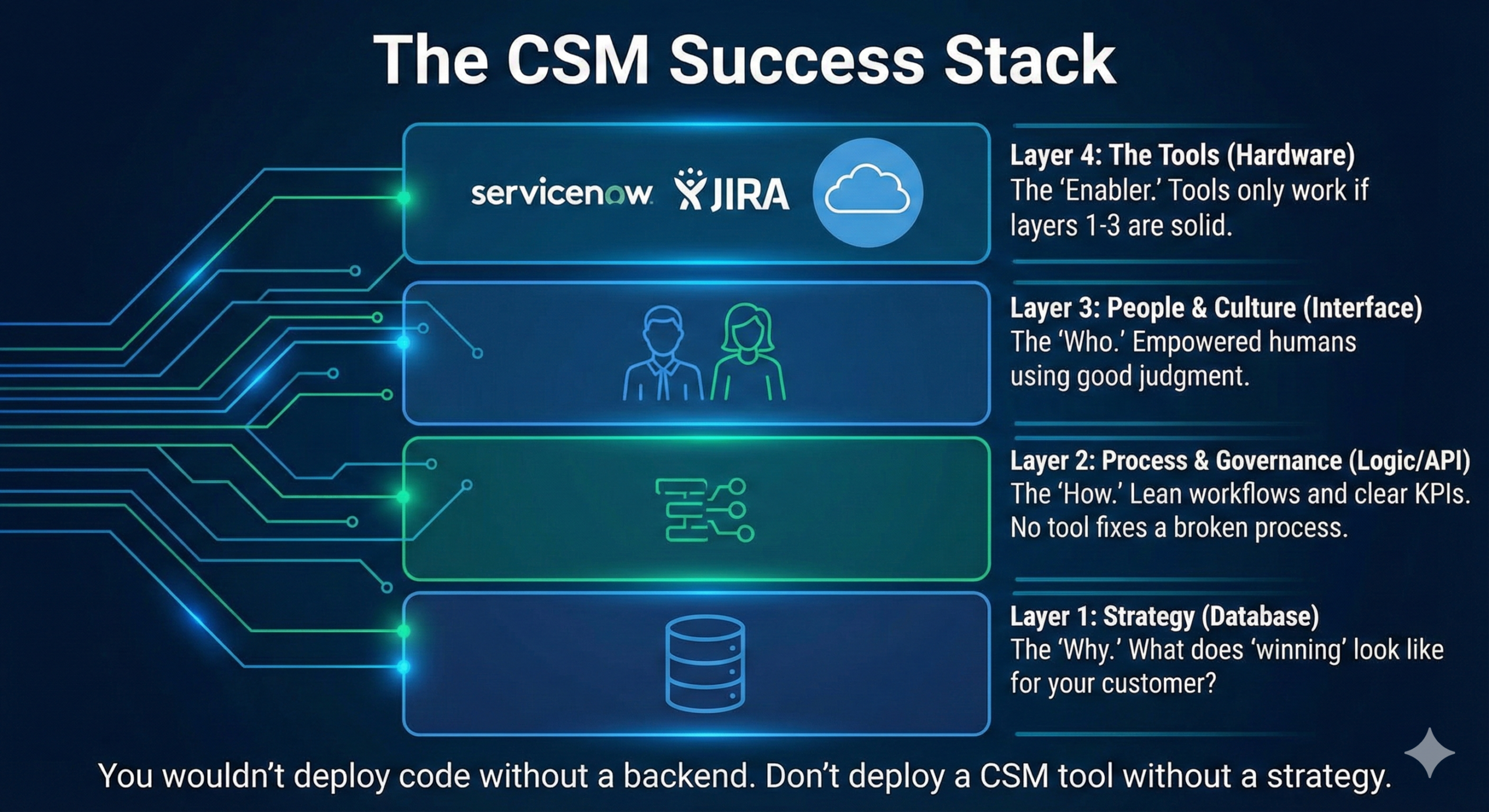
We’ve all seen it happen. A company spends six figures on a shiny new ServiceNow or JIRA Service Management instance. They spend months configuring dashboards and building complex workflows. But six months later, the ticket backlog is still a mess, the agents are frustrated, and the customers are even unhappier than before.
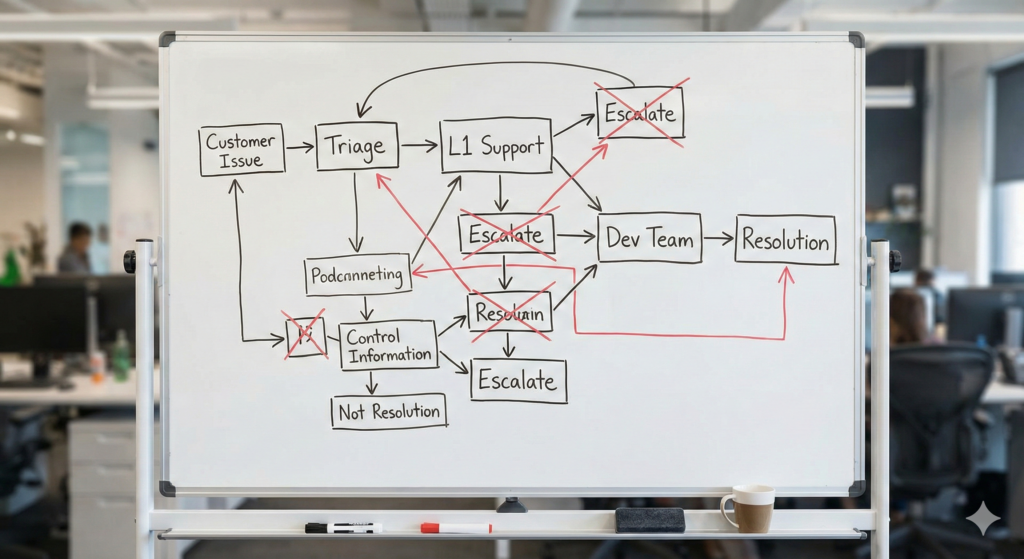
Here’s the thing: buying a tool and expecting it to fix your service is like buying an expensive treadmill and expecting it to make you a marathon runner. The tool is just a piece of equipment. If you don’t have the discipline, the plan, and the right form, you’re just wasting money.
For those of us in the IT world who are looking at leadership and business, we have to stop thinking of Customer Service Management (CSM) as a software category. It’s a business strategy.
What is Customer Service and Why Is It So Important?
In the simplest terms, customer service is how you support people before, during, and after they buy from you. But in a modern business context, it’s much bigger than just answering a phone or closing a ticket.
It’s about protecting your revenue. Research shows that about one-third of customers will walk away from a brand they love after just one bad experience. If you’re an analytical thinker, you know those numbers don’t lie. High churn rates are a silent killer for any business.
Great service isn’t just “fixing bugs.” It’s about “experience orchestration.” It means making the customer’s journey feel like one smooth path instead of a series of hurdles. When you get this right, you aren’t just a cost center anymore. You become a driver for loyalty and long-term growth.
The Evolution of Customer Service
Service has changed a lot. We started with high-touch, personal interactions in small towns. Then we moved to the industrial era where everything was about mass production and efficiency. That’s where the “cost center” mindset came from—treat support like a factory line where the goal is to get the caller off the phone as fast as possible.
Now, we’re in the digital and AI era. Technology lets us scale, which is great. But here’s the problem: technology also made things feel cold and robotic for a long time.
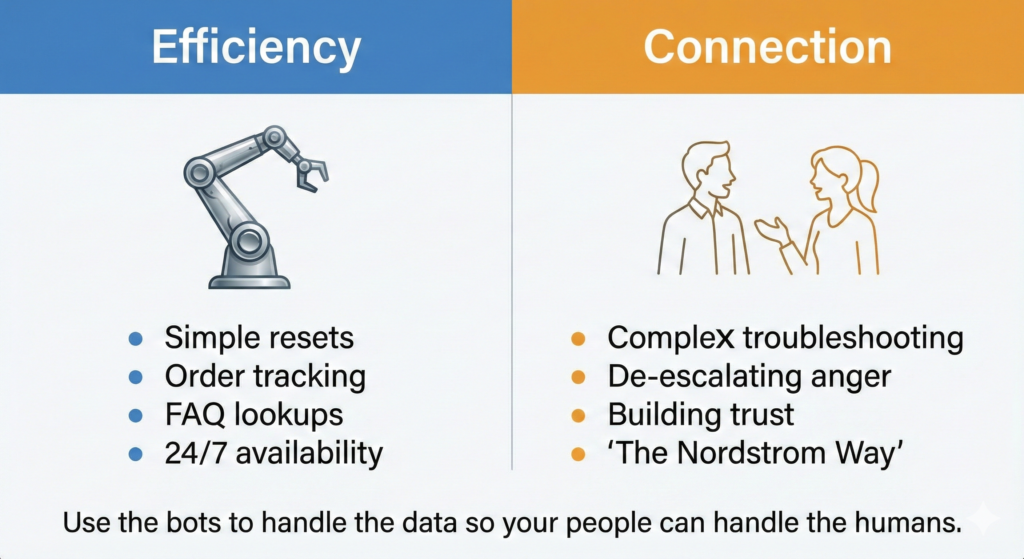
Today, we’re trying to find a balance. We use tools to handle the easy stuff so that humans can focus on the complex, emotional problems. The tech is there to provide the data, but the service is still about the person on the other end.
Customer service is going through its biggest change since the Industrial Revolution. It used to be seen as just a “cost center”—an administrative chore to handle complaints. But now, businesses see it as a powerhouse that drives growth and brand value. Moving into 2025 and 2026, we’re seeing a shift from reacting to problems to proactively managing the entire customer journey. This is happening because customers now expect more than just a working product; they want a smooth, personalized experience.
How We Got Here
Service has actually come full circle.
- Pre-Industrial: High-touch, personal relationships in small communities.
- Industrial Revolution: Shifted to mass production and efficiency, making service a low priority.
- Mid-20th Century: Formal service departments appeared to help keep customers stable, but they were still viewed as hubs for cutting costs.
- 1980s-90s: The “Quality Revolution” introduced CRM systems and process design.
- Modern Era: We are now in an “Experience Economy” where emotional loyalty and memorable interactions matter most.
Modern Support Structures
Most tech-focused companies use a tiered system to handle issues efficiently.
| Support Level | Who Handles It? | Responsibility |
| Tier 0 | AI / Bots | Self-service (FAQs, order tracking) |
| Tier 1 | Support Agent | Basic troubleshooting (password resets) |
| Tier 2 | Technical Lead | Deeper investigation (OS/Network config) |
| Tier 3 | Developer / Engineer | Root-cause analysis and code fixes |
| Tier 4 | Third-Party Vendor | External hardware or software repair |
By 2025, “Agentic AI” is redefining these tiers. AI agents are taking over most of L1, while human experts move into L2 and L3 roles as “auditors” for more complex, high-stakes issues.
Using Data and Logic to Improve
To keep things running smoothly, organizations use frameworks like Lean Six Sigma (LSS).
- DMAIC: This framework (Define, Measure, Analyze, Improve, Control) helps cut down wait times and errors.
- Value Stream Mapping: Every step a customer takes is analyzed to see if it actually adds value.
- Real-world fix: One company used LSS to find that a spike in handle times for remote workers was caused by switching from dual screens to single laptops. Adding monitors fixed the problem.
Key Metrics for 2025
Service leaders track specific numbers to see if they’re winning:
- NPS (Net Promoter Score): Measures how likely people are to recommend you.
- CES (Customer Effort Score): Tracks how hard a customer has to work to get help. High effort is a major loyalty killer.
- FCR (First Contact Resolution): The goal is usually between 70% and 80%.
- FRT (First Response Time): For live chat, the benchmark is 50-60 seconds.
Why Tools Alone Don’t Guarantee Success
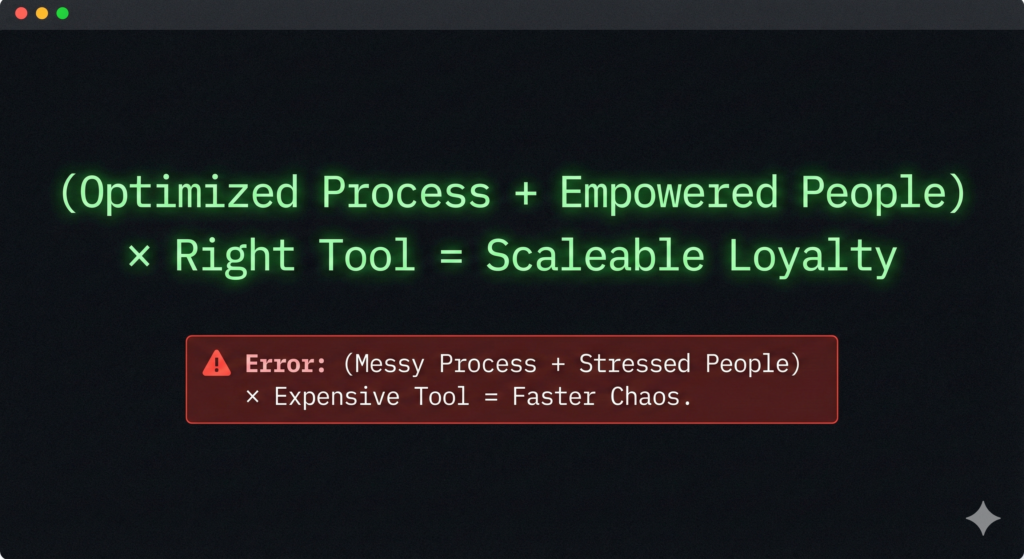
Enterprise leaders often fall into the “platform trap.” They think the software carries the weight. But here is what actually makes a CSM implementation work:
- Process Design: If you automate a mess, you just get an automated mess. You need to look at your workflows. Are you using Lean Six Sigma principles to cut out waste? If your process is broken, no amount of automation will fix it.
- People and Culture: This is the hardest part. You can have the best ticketing system in the world, but if your agents aren’t empowered to make decisions, they’ll fail. Look at companies like Nordstrom. Their “employee handbook” used to famously say: “Use good judgment in all situations.” That’s culture, not code.
- Governance and KPIs: You need to track the right numbers. If you only measure “Time to Resolution,” your team will rush through calls and leave customers feeling ignored. You need to look at things like Net Promoter Score (NPS) and Customer Effort Score (CES). These tell you how the customer actually feels, not just how fast the database updated.
- Leadership Alignment: If the people at the top only see support as a drain on the budget, the team will never get the resources they need to be proactive.
The Future of Customer Service Management
The next few years are going to be wild. We’re moving toward “predictive service.” Imagine a system that sees a server is about to fail and automatically alerts the customer before they even notice an outage. That’s where AI and automation are headed.
We’re also seeing a huge shift toward hyper-personalization. Customers expect you to know who they are, what they bought, and what their last three problems were, regardless of whether they’re talking to a bot or a person.
But remember: strategy must drive the technology. Don’t buy an AI bot just because it’s trendy. Buy it because it solves a specific friction point in your customer’s journey.
Examples of Excellent Customer Service Management
We can learn a lot from the heavy hitters:
- Apple: They work backward. Steve Jobs famously said you have to start with the customer experience and work back toward the technology. Their Genius Bar isn’t just a repair shop; it’s a place designed to build “emotional loyalty.” The tech they use behind the scenes is secondary to the feeling you get when you walk in. Also, they use the “APPLE” acronym (Approach, Probe, Present, Listen, End) to focus on empathy. They’ve also merged online and retail “handoffs” so service is seamless.
- Amazon: They have mastered the “frictionless” experience. Think about their “returnless returns” policy. They’ve done the math and realized that for some items, it’s cheaper and better for the customer’s mood to just give a refund and let them keep the product. That’s a policy decision driven by data, not just a software feature.
- Zappos: Prioritizes “WOW” moments over efficiency, letting staff stay on calls as long as needed.
- Ritz-Carlton: Gives staff a $2,000 discretionary fund to fix guest issues on the spot without needing manager approval.
- Nordstrom: Famously tells employees to just “use good judgment”.
The Bottom Line
If you’re an IT professional looking to lead, don’t get distracted by the feature list of the next big software update. Tools are enablers, not the foundation.
Success in CSM is built on three things: a clear strategy, smart processes, and empowered people. If you get those three right, the tool you choose will actually do its job. If you ignore them, no platform in the world can save you.
Focus on the puzzle of human behavior and process logic first. The software should be the last piece you put in place, not the first.
Leave a Reply